Slideshare

martedì 25 agosto 2015

The future of advertising on Instagram

All you need to know about the upcoming advertising possibilities on the fastest growing social network.

August update:

Instagram officially switched on its ads API earlier this month. This constitutes a big leap, as marketers can buy ads on Instagram in an automated fashion for the first time. Before to buy ads on Instagram you had to contact an Instagram sales rep directly, and this was only available in certain locations and for companies with large budgets. The release of this API by Instagram has serious ramifications for marketers.

Until the API realise it was very hard to track the effectiveness of Instagram ads. But now  brands will gain the ability to track their Instagram marketing activity. Interaction and the effectives of the posts can now be measured from desktops via 3rd party applications plugging into the API.

The release of the ads API will open up a huge array of opportunities and allow Instagram to grow rapidly now that it has generated a highly successful revenue stream. Analysis at Bank of America Merrill Lynch predicted it's revenues could increase almost tenfold over the next two years, to reach near $1 billion in 2017, and continue to skyrocket, to over $3.8 billion by 2020. This is huge growth that would see Instagram over taking Twitter and rivalling Google for mobile ad revenue.

Looking to the future

Instagram overtook Twitter late last year for number of monthly active users, within the next few years it will almost certainly overtake it in revenue. It is particularly popular with the millennial generation; over half of 18-29 year olds in the US use the platform, and is slightly more popular with women than men. It’s success with younger people means it is likely to grow in popularity and importance as an ad platform as its user base ages and starts to want to purchase cars, houses and all the trappings of modern life. The release of an API for ads by Instagram is, therefore, a big moment for advertisers everywhere. Anyone looking to advertise to a youngish demographic should certainly give Instagram ads a serious thought.

Instagram is among the fastest growing social networks in the world, and for the US market it is the single fastest growing network by total number of new users.

Instagram logo

For those wanting to target a younger audience, marketing on Instagram offers a huge opportunity. 53 percent of 18-29-year-olds in the US use the platform.

It is thus clear that especially for B2C brands, Instagram represents a key growth market for attracting customers, and those who fail to use it effectively risk missing out to competitors using the platform well.

Advertising on Instagram

In its infancy, there was no ability to advertise on Instagram, so the best brands could do was set up their own pages and try to build a following organically. However, the platform started allowing certain advertisers to use the platform a year and a half ago. These were major brands that created high-quality ads, and the results were pretty impressive. Ad recall from the sponsored Instagram posts was almost three times higher than the norm for online advertising. However, this should be taken with a pinch of salt as the platform has previously been ad-free, so it is not clear if these engagement rates will continue

A study by Instagram itself into the effectiveness of its ads (so do be a little sceptical, they’d want to make their ads seem effective after all) showed that of 4 campaigns reviewed there was a 32-point incremental lift in ad recall per campaign compared to a control group. There also was a 10 percent lift in brand message awareness. Statistics on ROI are not available because the campaigns were delivering board reach advertising to increase awareness. There was no option to click through to buy products or learn more.

Instagram ads examples

New features for advertisers

Instagram announced a month ago that it would be increasing its ad offering to give advertisers more options. The different ad formats include letting people sign up, buy a product or download an app directly from an ad. Instagram has been relatively vague on the details, but these will be revealed in the coming months as the features are released.

Enhanced ad targeting

Instagram knows that it users won’t want to be bombarded with irrelevant ads. It also knows that advertisers want to only pay to put ads in front of people that are going to be interested in their products or services, so as to be able to get the best possible ROI.

Offering advertisers better-targeting options is a win-win scenario for all involved. The critical component to be able to target effectively is data. Does Instagram have the relevant data on age, gender, interests, location etc. that facilitates this kind of targeting? No. But it does know someone who does. As Facebook bought Instagram in 2012, it has access to the wealth of data that Facebook has on its users.

Instagram says this will mean advertisers will be able to target via demographics and interests data that has been gathered by Facebook.

How will Instagram ads be purchased?

Instagram's newly released Ads API means they can be bought through 3rd parties using the API. However so as to make it easier for businesses large and small to purchase ads on the platform, Instagram says that it wants to ‘leverage the best of Facebook’s infrastructure for buying, managing and measuring the success of ads on Instagram’. So expect changes coming soon, possibly allowing Instagram ads to be purchased through Power Editor.

Can I advertise on Instagram now?

Yes! The ads API is now released, so you can buy ads on Instagram through 3rd parties using the API.


from Smart Insights http://ift.tt/1V2bwra
via IFTTT

The marketing advantages of mobile payments

Mobile payments are a huge opportunity for marketers. Here is why:

Mobile payments aren’t just a way to process credit and debit card payments; they can offer an inexpensive means to help you reach a wider customer base, and cultivate lasting relationships. Here are a few of the marketing advantages mobile transfers and communications can offer.

Mobile payments and promotions reach customers via the tools they use most often — cellphones and tablets.

When businesses send a letter via direct mail, or advertise in local media, there are a host of unknowns: Will the marketing piece reach the intended recipient? Will it be read? If it does get noticed, will it arrive when the customer wants to purchase what you’re promoting? Most importantly, will the prospect remember your business once he/she is ready to buy?

These variables can be a costly gamble, since they are virtually impossible to control. Mobile marketing campaigns, on the other hand, deliver messages right to the tools that customers have in tow, helping to prevent most of the aforementioned problems.

mobile payments

More than half of all Americans own a Smartphone (latest research shows 67%), and Bloomberg reports that people now spend more time looking at their cellphones than watching television. For many customers, a smartphone or tablet is the last thing they see before drifting to sleep, and the first thing they check in the morning. Mobile marketing messages empower businesses to target clients on the medium with which they’re already engaged.

Mobile campaigns increase the likelihood of message relevance

 Direct marketing campaigns and printed advertisements and billboards require a marketer to invest in media space, creative development and production. There’s no guarantee, however, that the message will reach an interested audience.

By contrast, mobile marketing messages are inexpensive to develop, and can be highly targeted based on your inventory and sales goals, along with a customer’s past mobile purchase behavior. Prospects are less likely to receive irrelevant offers, which gives your business flexibility to tweak messaging or promotional campaigns as needed. With maximum cost efficiency, merchants can test and refine offers to determine which elements best drive results.

Increased exposure to new audiences

Customers often rely on friends and family — and even social media contacts they’ve never met — to help them make business decisions. Many mobile payment provider apps let merchants engage with customers on social media to reward them for sharing positive posts, or tagging the business location. This helps increase awareness of (and interest in) your brand.

Streamlined loyalty programs.

A study by IDC Financial Insights found that rewards programs are a primary factor that customers consider when choosing how to pay. Many mobile payment providers work in tandem with loyalty rewards programs so customers can automatically earn and redeem perks when they make a purchase.

mobile payments

Level the playing field with larger merchants

Small businesses aren’t just competing against one another for the customer’s attention; they’re competing against online retailers, and large, well-established brands. Regardless of what you sell or from where, mobile payments provide the same customer conveniences as larger merchants, including the ability to check out quickly with a debit or credit card, and — in some cases — a mobile wallet.

Businesses that accept mobile payments will optimize marketing expenses, and deepen long-term customer relationships.


from Smart Insights http://ift.tt/1PP2kCI
via IFTTT

lunedì 24 agosto 2015

Why responsive web design is important [Infographic]

These Statistics prove you need a responsive site

Mobile now accounts for more than half of all web visits and this rate is only going to increase in the coming years. Google’s ‘Mobilegeddon or mobile friendly’ update earlier this year meant non-mobile friendly sites are penalised for not being mobile friendly in search rankings. That means it has never been more important to have a mobile responsive site. If you need help convincing your CFO to release the budget to get a mobile responsive site, or if you are a manager who isn’t sure if they need to go responsive or not, take a look at this infographic which gives you some helpful stats to demonstrate the important of responsive web design.

why-responsive-web-design-is-important


from Smart Insights http://ift.tt/1fBfA0B
via IFTTT

5 scientific reasons why content personalization is so effective

How does personalisation increase conversion rates?

Science ScientificIn our experience, effective content personalization increases conversion rates, boosts lead generation and cuts cost per lead. It might be intuitive to believe a personalized message is more effective than a one-size-fits-all message, but intuition isn’t the driving force here – what does the data show?

We have now served millions of personal content recommendations, and the evidence now shows an increase of 20%-30% in conversion rates, across all on existing traffic and content. Behind these numbers, there are several cool scientific reasons why this works so effectively.


5 ways personalisation enables you to generate more return from your content strategy

Here are five reasons why personalisation is effective, the first from the perspective of the marketer and four from the point-of-view of the online visitor:

1.  Take the economically-efficient choice and go after the low hanging fruit

If you are in marketing today you probably noticed that you are faced with a wide array of opportunities where to invest the marketing budget. Indeed, you are already frequently working with more than a hundred software programs. And you are already paying so much to get the visitors to your website - you spend on content planning and production and SEO and then on media, and now, if you’re successful, you have an audience at your virtual door and you are confronted with three major problems:

  • 1. The user has already made up her mind - according to CEB, 57% of the customer purchase decision is complete before a customer ever contacts the business.
  • 2. 98% of visitors will remain anonymous, making it very difficult to decide where they fit in within your array of desired personas.
  • 3. And then there’s this: combine the median business site load time of 3 seconds with the fact that the majority of visitors leaving after 15 seconds - and you have only 12 seconds to engage with these anonymous visitors who already know what they want.

By converting the visitors who are already at your website – the low hanging fruit – you can generate leads of the same quality at a cost of 3 to 6 US Dollars, according to BrightInfo’s data. From the economic standpoint of measuring alternatives, that is very efficient.

2. Cut through the paradox of choice

With so much content, a visible real-time offering counteracts this phenomenon, described so eloquently in this TED video. In short, in terms of customer satisfaction, it is true that some choice is better than no choice. But it is not true that infinite choice leads to greater satisfaction than limited choice. Having a large and diversified arsenal of content is usually a smart strategy, as it helps to cater to bigger crowds. But each visitor is at risk of getting lost by trying to compare different offers that compete for his limited attention span.

3. Reduce a related effect – Analysis paralysis

Analysis paralysis is an anti-pattern, a state of over-thinking a situation so that a decision is never eventually taken. This happens when a decision is considered as over-complicated, with too many detailed options, so that a choice is never made, rather than try something and change if a major problem arises.

Even worse, when people start to look for that optimal or perfect solution, they not only fear making any imperfect decision, but they start imagining that there is an ideal solution.

Once they don’t find it in those 15 to 30 seconds they spend on your website, their image of your product or service may remain negative for a very long time. In addition, anything that they do actually try out or buy will most likely be compared to that imagined solution – and reality often fails to meet imaginary expectations.

4. Cut the rate of horrible decisions: Extinct by instinct.

Ironically, extinct by instinct is the opposite effect of analysis paralysis, and is also true on your website: No single website can overcome the overall information overflow. Your website is part of a vast amount of information every qualified lead has to go through and process each day, and some of them will make their decision based on hasty judgement or a gut-reaction.

With more and more of the decision-making process happening BEFORE the visitor ever gets to your website, you want to make sure that his decision-making is as accurate as possible as soon as he shows up on your radar.

Content personalization can limit the amount of fatal decisions based on hasty judgement or a gut-reaction that result in unsatisfied customers. With so many competitors out there, having unsatisfied customers is not a thought you want to entertain.

5. Prevent users disorientation

Another closely related phenomenon, disorientation, can be tackled by shortening the funnels – the track a consumer takes through your website. This is especially important in websites that offer numerous products, services, and content, and experience high bounce rates.

Plenty of our clients place a lot of emphasis on page-views, often thinking the more the merrier. But, as we just as often reply, there is also some danger there – that is, to show the wrong pages.

You never ever want a visitor to think, 'wait, why am I even seeing this?' Instead, focus on leading visitors in the right path, by highlighting the way through their personal interests.

Image credit: Freepik


from Smart Insights http://ift.tt/1KGVhHL
via IFTTT

venerdì 21 agosto 2015

7 ways you could be screwing up your sales funnel

Avoid these 7 mistakes at all costs when building and managing your sales funnel

Your sales funnel is the core of your marketing plan. It's the map of a customer's journey, right from the first interaction with your brand all the way to the final sale. Every piece of content you create and every marketing strategy you implement is built around your sales funnel.

In short, your funnel is a critical component that decides your online success. And unfortunately, you could be screwing it up.

In this post, we'll explore 7 of the most common mistakes that plague sales funnels, plus strategies you can apply to overcome each error.

1. You're not tracking enough data

A lot of marketers focus only on the big-picture metrics like page views, visitor-to-customer conversion rate, and bounce rate. Whereas, metrics with smaller scopes—like return visitors, exit pages, and scroll patterns—remain totally ignored.

This is a fatal mistake. Even though big-picture metrics are doubtless important to your sales funnel, the smaller metrics frequently provide much more actionable insight into how you can improve your sales funnel.

For instance, say that your overall traffic conversion rate currently sits at 1%. This is the big picture: 1 out of every 100 of your visitors eventually becomes a customer. Although this metric does give you a broad view of what's happening on your site, it doesn't show you specific areas of your marketing strategy that need improvement.

Now let's say that you go back over your sales funnel armed with a fine-tooth comb. You discover that out of every 100 visitors, 5 end up as email subscribers (5% visitor-to-subscriber conversion rate). However, out of those email subscribers, only 10% regularly open the emails you send.

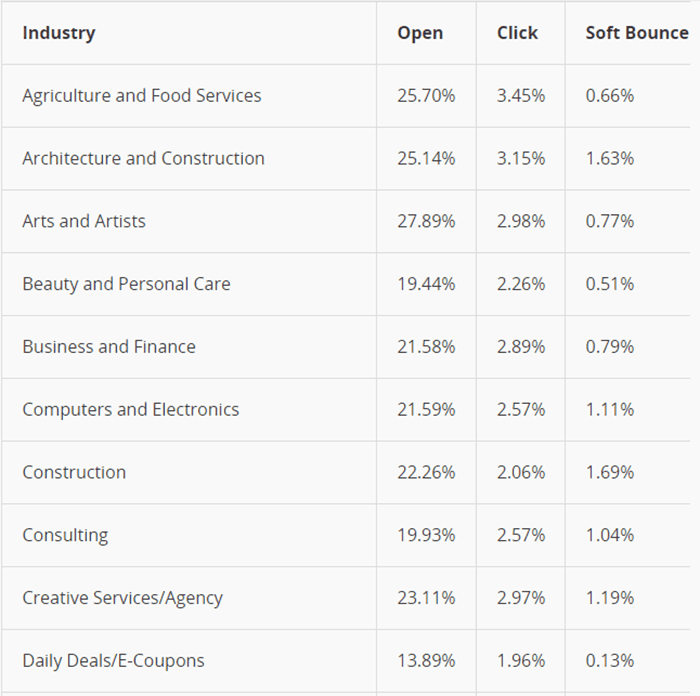
This low open rate definitely needs work. According to MailChimp, open rates are typically >20% across the board in most industries.

Email-Open-Rates

Thanks to this relatively small metric, you now know a specific area in your marketing strategy that needs improvement. If you had focused only on the big-picture metrics, then it's possible that you might have never noticed this loss.

How to fix this

Make sure that you're focusing as much on small-picture metrics as you are on the broader ones. If your current analytics platform doesn't allow you to drill down into the metrics behind each step of your sales funnel, then consider changing over to one that does.

2. You're not testing multiple payment gateways

One of the trickiest parts of building a sales funnel is choosing the right type of payment gateways. The ideal payment methods in the real estate industry, for example, are often very different to those that work best in the Ecommerce industry.

Another problem you have to deal with is selecting the right number of permitted payment gateways. Too few and your sales funnel won't be able to accommodate a part of your audience. Too many, and you could end up scaring away some leads because of the excess choice.

How to fix this

The solution is continual testing. Test various combinations of different types and numbers of payment gateways until you find one that works well for your target audience. Here's a short list of some of the most popular e-payment gateways to get you started:

3. You're not prioritizing lead nurturing

Another common mistake in sales funnels is too much focus on lead generation, and too little on lead nurturing.

When lead generation is the sole focus, then a low lead-to-customer conversion rate is guaranteed to follow. You might have a lot of new leads entering the top of your funnel, but only a very small portion of them will ever make it all the way through and become customers.

How to fix this

Use marketing automation tools like content segmentation to ensure that all of your new leads are drip-fed content personalized to their demographics and tastes. Also, consider using lead scoring to evaluate the contacts that are most ready for the sale and move them along the pipeline accordingly.

4. Your copy sells features, not solutions

I recently came across an excellent quote from copywriter Konrad Sanders.

Copwriting-Sell-Solutions-Not-Featuers

This tip could be the best one I've ever read on copywriting. When selling a product, the worst possible thing to do is to try to sell it to your audience by the merits of its features. Your customers don't want to know about features: they want to know about solutions. The copy's focus, then, should instead be on the problem your product solves for customers.

How to fix this

Every customer who's ever bought your product did so in order to solve a problem. Survey your current customer base to understand exactly what that problem is. Identify the most common pain points of your customer's experience, then write your copy around that information.

5. You haven't removed buyer inhibitions

Simply put, buyer inhibitions are the things that stop a lead from becoming a customer. Inhibitions are the fears that every customer has about buying a new product or hiring a new service.

Here are a few examples of common fears:

  • How do I know I can trust this company to deliver on its promises?
  • How do I know this product is the right fit for my specific needs?
  • Does this company have a proven track record of success?

If you don't take away these fears, then a large percentage of your leads will never make it through your sales cycle.

How to fix this

Information is key here. If you haven't noticed, a common trend among the fears I just listed is when the lead doesn't know something. Take the first fear, for instance: "how do I know I can trust this company to deliver on its promises?"

This fear deals with trust. Leads who have this inhibition aren't sure whether they can trust your business with your money and they have been provided no information to alleviate this psychological block.

One common way to solve this fear is to use trust symbols and social proof. A trust symbol is a visual signal that communicates trust to viewers, such as a McAfee "secured" badge.

Baymard Institute recently did a survey to discover which trust symbols are preferred by consumers. Norton and McAfee logos came out on top.

Trust-Symbols

Trust symbols aren't the only way to remove buyer inhibitions. Client logos are widely used to build social proof and relieve buyer anxiety. In addition, case studies that show leads exactly how your past customers have benefited from your business can also work to increase conversion rates.

6. You're using the wrong CRM

One prevalent mistake marketers make when maintaining a sales funnel is choosing the wrong CRM to manage their contacts. It's important that you choose carefully. To achieve the right results with your sales funnel, you need to make sure you're using the right technology.

Too often, though, I've seen marketers directly go in for whatever tool is the hottest on the market, or whatever tool they've already heard about from friends or from the blogs they frequent. Once they go in for a CRM without researching all of the available tools in detail, the inevitable result is a waste of time and resources as they endeavor to adapt their sales funnel to their CRM (it should be the other way around).

How to fix this

If your CRM isn't working out for your marketing strategy, then it might be time to change. Here are a few important factors to keep in mind when choosing the right CRM.

Price creep: A majority of CRM tools will charge you according to the number of contacts in your system. While the beginning plan may not be expensive, down the road you might find yourself in a position where you'll have a much larger number of leads in your system. Make sure that your budget will be able to accommodate the higher prices if/when that happens.

Flexibility: Different CRM solutions come packaged with different functions. The CRM you choose should have the flexibility to fulfill all the functions your sales funnel will require.

Data tracking: If you're not interested in using a third-party analytics platform, then make sure you find a CRM that offers built-in tracking so you're aware of all vital metrics.

Onboarding: Consider how much time it will take you to get used to your new CRM. Also think about the onboarding process and how the tool provider works with new customers to ensure they're making the most out of the platform. Some tools levy a mandatory kickstart fee (Infusionsoft, for example, charges $1499 to new accounts).

7. Your marketing and sales departments aren't working together

The biggest screw-ups in sales funnels often result from marketing and sales departments that aren't working together as they should.

Here's what typically happens: marketing focuses on generating as many leads as it can to hand off to the sales department. Sales complains that marketing focuses on lead quantity, not quality, and refuses to work with what they deem to be low-quality leads. Marketing protests this, saying that sales isn't doing their job, and sales responds in kind.

The whole process results in a lot of needless friction between the two departments that engenders revenue loss. This is a very unfortunate problem, especially when you consider that both marketing and sales have the exact same end goal: more revenue.

How to fix this

The best way to resolve interdepartmental disputes starts with discussion. Sit marketing and sales down together, and start talking things over.

The first thing you'll want to do is to agree on a common definition of a quality lead. Let both your marketing and your sales guys come up with a set of guidelines/criteria that each lead must meet. That way, marketing knows exactly the type of lead sales needs to produce conversions, and can plan accordingly.

Next, discuss strategies to generate and nurture these leads. Only when everyone is on the same page strategy-wise can marketing and sales truly be aligned and working in tandem.

Wrapping Up

While it may take you both time and resources to work out all the kinks in your sales funnel, the end result is definitely worth it in the long run. A solid, well-organized sales funnel is the core of every online business: a vital cog without which all marketing strategy is doomed to failure.


from Smart Insights http://ift.tt/1h0ij4N
via IFTTT

Beginners guide to SMS marketing [Infographic]

Use this infographic to get started with SMS marketing

The digital and mobile marketing space offers tons of affordable options for small business owners. As a marketing professional, you may find it difficult to prioritize, and discover which methods are the most effective for your business. SMS marketing is one of the most immediate and cost-effective mobile communication tactics. This detailed and easy to follow infographic from SMS marketing provider, Slicktext.com, lays out the basics of this mobile solution. With SMS marketing, small business owners can fire out exclusive offers to a loyal and qualified subscriber base. In turn, this kind of consistent exclusivity helps business owners increase brand loyalty, strengthen customer relationships, and increase offer redemption.

As laid out in the infographic below, always keep these important tips in mind when taking advantage of SMS marketing.

  • Choose a textword that is unique to your business.
  • Respect your stated campaign frequency.
  • Always measure and review opt in rate, churn rate, and offer redemption.
  • Only send out exclusive and limited time offers.
  • Don’t forget to promote. If customers don’t know about your mobile rewards program, your list simply won’t grow.

With SMS marketing, your results are only as good as your efforts. Spend time combing through educational resources, such as the one below, and you’ll soon become an SMS marketing pro. Never rely on one marketing method to save the day. Partner SMS marketing with other options to increase your user reach and engagement.

SMS marketing infographic


from Smart Insights http://ift.tt/1gZZ2Ak
via IFTTT

Top 5 Tips for B2B Facebook Advertising

Facebook advertising is traditionally best for B2C marketers, but now B2B marketers can get in on the action.

Move over B2C marketers, the B2B crowd is coming to Facebook advertising, and they’re ready to play hardball!

Traditionally, Facebook advertising has been somewhat useless to B2B marketers. It’s a great tool for B2C marketers, who can offer discounts, promote sales and retarget buyers who have left items in their carts through adverts on Facebook, but these tactics don’t always work for the B2B crowd.
Facebook advertising

When it comes to advertising, B2C and B2B marketers have different goals in the back of their minds. B2B marketers are out to:

  • Create a strong brand recognition.
  • Generate increased knowledge and awareness of a product or service. You can create buyer personas to help you better understand who you’re targeting.
  • Reach out to company advisors, decision makers and others involved in a company’s buying process.
  • Take down contact information for each lead.
  • Nurture leads through the sales funnel.
  • Pass strong leads on to sales.

All six of these goals can be done with Facebook alone, but few B2B marketers understand just how valuable a strong Facebook advertising strategy can be to them.

So for those still wondering, “Does Facebook advertising work for B2B marketers?”, here are our top five tips for B2B Facebook advertising.

1. Reach Past Your Facebook Page’s Audience

Having a Facebook page for your company is a great start for any B2B marketer. The page allows you to connect with all your followers at once and share your own content, other content you find on the web, interesting articles and relevant news updates.

The problem with your page though is that you’re limited to the people following you. If you’re posting to an audience of 500 people, then that’s it. Few people outside of this audience will see your content. Sure, someone might share your post, but that’s not always guaranteed.

With Facebook advertising, you can target all sorts of prospects. You don’t have to have any prior connection to them, and with over 1.41 billion monthly users on Facebook, you can be certain your audience is there. Your ads can appear alongside their newsfeed or as sponsored content, depending on what you paid.

Facebook advertising is a lot like Google Adwords. Your ads will appear to those meeting certain qualifications (we’ll get to some of these later), and they serve as a great casual introduction. If you’re trying to land new clients in a specific area, you can set your ads to appear to those with a certain state or city listed in their profile.

You already know the people who are interested in what you’re selling. Facebook advertising will help you build a bridge to them and make it easier to cross into your sales funnel.

Facebook advertising

2. Use Custom Audiences

Though you may be active on Facebook already, there’s a good chance that not everyone in your database has liked you on Facebook. That’s okay. They don’t have to. You can still target them with Facebook advertising.

Most people use one email address for all their social media accounts to make it easier to log in. Chances are, that same email address is sitting in your database right now. Facebook advertising will let you upload these email addresses and then target the users attached to them.

To find Custom Audiences, go to Campaigns. Audiences will be listed under Campaigns at the bottom. Once you click on the tab, select Custom Audiences and select Customer List. This will allow you to upload your own list of email addresses.

You can also cross-match this list with your own list of existing customers who have already liked your Facebook page. Depending on how you’re marketing to Facebook followers, you may want to only advertise to those not already in contact through Facebook. In fact, if you want to attract new Facebook followers with Facebook advertising, make sure you cross-match this list so you don’t waste time advertising to a current follower.

Now you can further segment your database into certain demographics to target even further. If you’re promoting two free trials of two different services, then you can split your database so one half receives one offer and the other have received the other offer. Rather than blasting a generic advertisement, you can tailor your messages to better meet the needs of your audience.

3. Target B2B Work Categories

You know that you can target ads at people within your geographical location, age and gender, but did you know you can go after other profile features? Facebook advertising also allows you to target prospects based on the job they have listed or a major life event. This can be extremely useful for reaching out to entirely new prospects and introducing them to your company.

When you’re creating your ad, go down to the More Demographics button. A menu will pop up with many other great demographic-defining choices that will help you make the most of your ads.

Employer

If you already know which specific companies you want to target, then this is a great tool to target employees of these companies. Choose the right company you want to target form the drop down list. Previously, this feature was called “workplaces,” so remember that these are the same feature.

This feature will also let your target broader categories and locations. You can send out your ads to people working in a specific industry or work in more unique settings, such as a home office.

Job Title

Some B2B marketers target specific job titles because they are the ones who usually control the the purse strings of the company. If this is your line of work, target those same job titles on Facebook. Most people display their job title proudly so you’re sure to get  good pull for each ad.

Marketers who work with people from multiple departments will find it easy to create tailored ads for each group. You can target broad groups, such as entrepreneurs, to more specific job titles, such as project managers.

New Job

This is a life event category combines the Job Title category with a sense of urgency. When people get new jobs, they want to show that they are innovative and forward-thinking. At this stage, they’re also open to making new changes to the way the company functions, so they’ll be willing to meet with sales representatives to consider possible change-ups.

The New Job field creates and AND situation for better targeting. Rather than targeting people with new jobs and a specific job title separately, target them together to maximise your potential reach.

Facebook target new job

4. Focus on Offering Incentives and Lead Generation

B2C marketers like to offer incentives to convince people to click to buy a certain product, and now B2B marketers can generate leads using a similar tactic with Facebook advertising.

Rather than getting a lead to buy a product or service (which they might not be ready to do yet), you can get them to visit your website and hand over their carefully-guarded email addresses. If you offer a service or product, create an ad that promotes a free trial offer of your product.

This can also be used to promote gated content, such as an ebook or an upcoming webinar, to help build your emailing list. By targeting users based on the criteria mentioned in Tip #3, you can entice viewers to come to your website and get access to your great content. All that they need to do is give you their email addresses, and you’re on your way to growing a full database.

Don’t forget to up sell! If you go back to Custom Audience, you can create a list of consumers who bought a specific product or service from you and advertise an upsell. Think of it like creating a “People Who Bought This Also Bought This” ad, similar to the ones your see on Amazon.

5. Retarget Your Lost Prospects

We’ve talked a lot about reaching out to new consumers and generating leads, but Facebook advertising has another purpose: retargeting lost consumers. A consumer who looks at your product or service, but doesn’t buy anything doesn’t have to be a lost cause. Facebook advertising can help you encourage that consumer back to your site.

Using the Custom Audience feature once more, you can target visitors who previously visited a specific URL. It doesn’t have to be a page on your website; it can also be a landing page. If a consumer didn’t follow the CTA on your landing page, your ad on Facebook can retarget them.

To take advantage of this feature, you need to be sure that you already have a Facebook website custom audience in creation and ready to go. In case you need a refresher, you will need to:

  • Go to Facebook Ads Manager.
  • Go down to Audience.
  • Choose the Create Custom Audience.
  • Go to the Under Website Traffic and choose People Visiting Specific Pages.
  • Go down to the Visited page and customise the URL elements to match what you want to target.
  • Hit the Create button.

Then you will need to put in a special bit of coding in from Facebook - called an offsite pixel - into the codings on the pages you want to track. When someone visits that page, they will be added to the Custom Audience list in the Facebook Ads Manager and Facebook will be able to show ads to them, based on the type of ad that you already created.

With Facebook advertising, the possibilities are endless. There are so many different ways B2B marketers can target new leads and retarget lost leads through facebook. By exploring the extensive Custom Audiences feature, you’ll find new opportunities to stay connected with your fans and reach out to new consumers to better grow your business.

Which one of these tips will you try first?


from Smart Insights http://ift.tt/1U3esR0
via IFTTT